
Mastering the Art of Crafting an Effective Resume: A Comprehensive Guide

Image

Writing A Functional Resume: A Comprehensive Guide

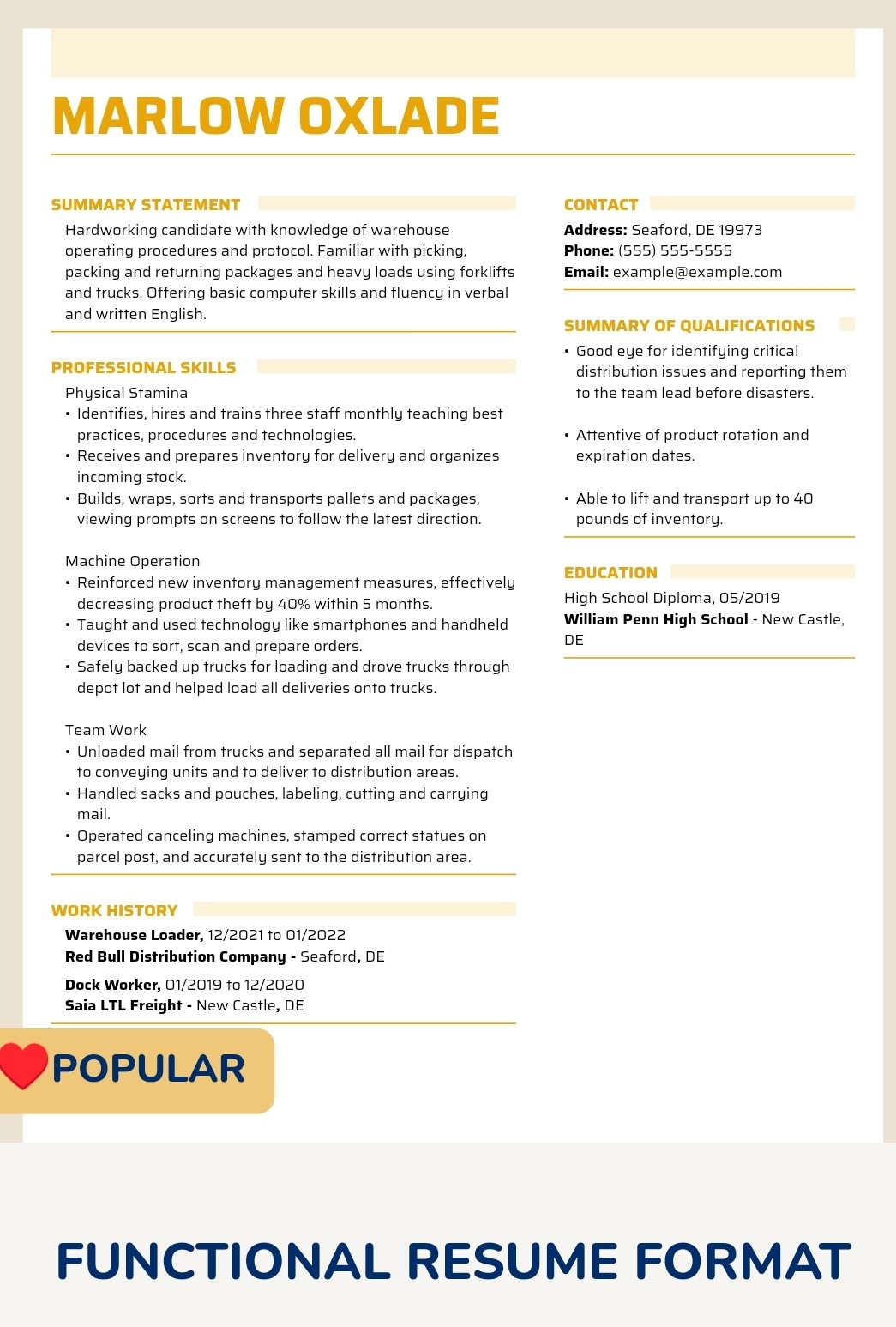
FUNCTIONAL RESUME FORMAT is the Best resume format for:

  • First-time job seekers or candidates with no work experience.
  • Entry-level jobs (such as administrative assistant or warehouse associate).
  • Jobs that place heavy importance on skills (such as a machinist, web developer position or professional drivers).

  • When you think of “function,” you think of skills and abilities that fulfill your work duties — in other words, your work functions. The functional resume format thus focuses on all the skills and training you have that fit the job description.

    Are functional resumes bad? Some experts discourage using functional resumes because they’re organized differently from chronological resumes, and thus might confuse recruiters. Our advice: As long as your situation fits the format, a functional format is a good resume format for presenting your qualifications.

    In this latest resume format, your skills are broken into important subcategories (e.g., “Technical Skills” or “Soft Skills”). Be sure to tailor your skills sections to fit the skills that the specific job needs.

    Your education section should also feature any specialized classes or training that match the job you want. For more tips on this resume format, see below:

    Writing tips for the functional resume format
    Image
  • Resume objective or summary statement: If you’re seeking a job in which you’re expected to define your career goals, start off this professional resume format with an objective statement (also known as a career objective). In it, write two to three sentences explaining your employment goal, along with your best skills and qualifications. If your experience places more value for the role, go with a standard summary statement.
  • Skills: Unlike the other resume formats, a functional resume has several skills sections:

    The “Summary of Qualifications” section describes your best skills and how these skills were put into action. You can refer to internships, projects or extracurricular activities relevant to the job.

    “Professional Skills” or “Relevant Skills” sections are used to explain hard skills further — abilities acquired through practice, education and repetition that are job-specific (such as data management, editing, translation or budgeting).

    Make sure to also feature “soft” skills: intangible traits that lead to better job performance, such as organizational skills, problem-solving or interpersonal skills.

  • Work history: Keep this section concise, listing any previous positions or professional experiences, names of the companies you’ve worked for and your dates of employment, as seen in our resume format example above. If you don’t have formal work experience, include any relevant internships, volunteer work or extracurricular activities.
  • Education: In addition to your academic credentials, supply details about relevant additional training or certifications (e.g., a certification in Adobe Creative Suite for graphic design work) to complete this resume format.

  • PROS:

  • Useful resume format for recent graduates or first-time job seekers.
  • Excellent resume format for jobs with a premium on specific skills, particularly transferable skills across jobs or industries.
  • Good format for presenting a wide range of qualifications.
  • CONS:
  • Emphasis on skills rather than work history is not a great fit for jobs that require experience.
  • Not the best resume format for job seekers who can show off consistent career development and achievements at previous jobs.
  • Applicant tracking systems (ATS) can have difficulties scanning this format.

  • MASTERING THE ART OF CRAFTING AN EFFECTIVE RESUME: A COMPREHENSIVE GUIDE

    © Job Search Solution. All Rights Reserved.